One of the most beautiful aspects of the pen world is the diversity of roles available. The vast majority of those involved are buyers and collectors, while a smaller group is composed of makers and innovators. In this category are included small pen turners, nibmeisters, those engineering pens, urushi artists, and pen accessory makers. Even representatives from larger companies, despite their role as the seller, feel like a true part of the community. Niche hobbies like fountain pens tend to harbor this type of environment.
As a long-time fountain pen user, I have found that my taste has changed over time. While I have an immense amount of respect for every small business or maker involved in the world of fountain pens, I am attracted to a smaller number of pens overall, and therefore a smaller number of custom/maker pens. It takes serious innovation for a maker pen to pique my interest. Some makers that intrigue me include Tom Westerich of penboard.de, Francis Goossens, and urushi artists like Bokumondoh. Tohma is another that I will write about soon. Two of my most recent aquisitions are from such an artist, somebody who is innovating and creating pens unlike any others: William Shakour.
I first encountered William’s work on Instagram–he’s known for his massive, 3D printed piston fillers. I never purchased one of his original Titan pens, so I was excited when I saw a post with 3D renders of his updated lineup of seven all-new models. When one of my Facebook groups posted a group-buy for these new designs, I took the opportunity and put myself down for two pens–a “Torpedo” model, and the Pocket Titan, which occupies a relatively untapped area of the pen market. It’s a piston filling pocket pen threaded, like all of his pens, for a Bock 380 nib. What more could I ask for? About 3 months passed between joining the group buy list and the arrival of the new writing instruments.
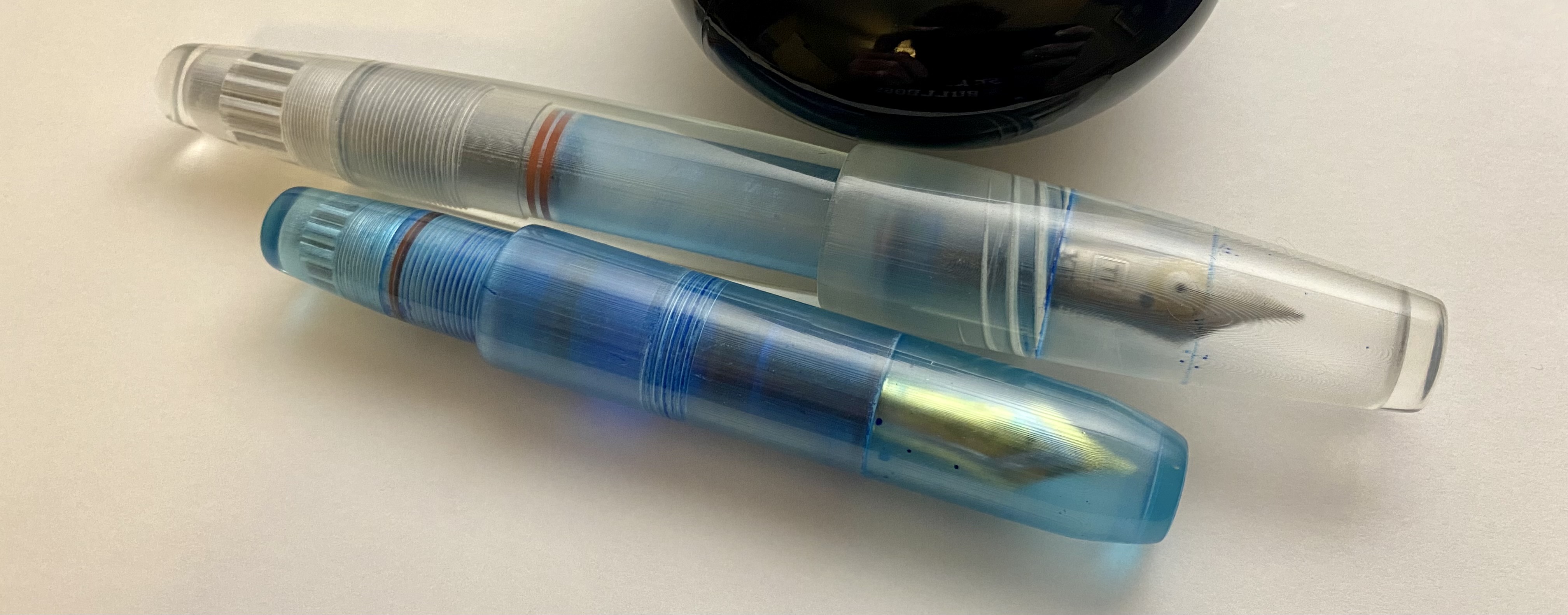
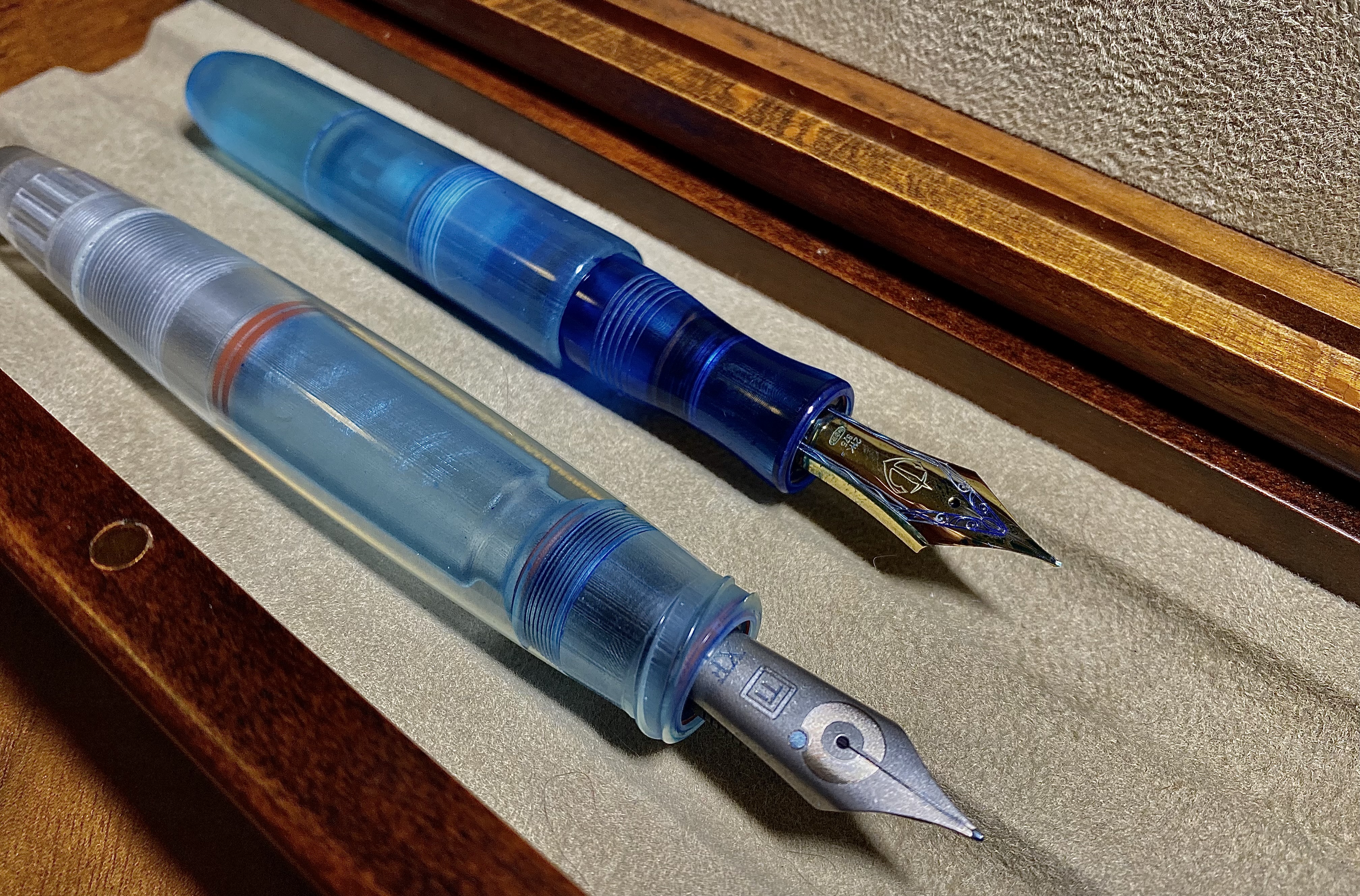
The pens are sent in plastic shipping tubes with a little bit of styrofoam in each end to keep them secure and unharmed. I appreciate the simple nature of this packaging method–no fuss, little waste. I started by opening the Torpedo. The pen has a streamlined body: from the blind cap to the section threads (which are on the front of the section) is a single piece of transparent UV-cured resin. The design is reminiscent of the Conid Minimalistica, but the Torpedo is significantly larger and lacks any of the hardware present on the Conid. The blind cap is relatively long and connects to the body via a long set of inner threads (which admittedly look very cool). The cap is huge, but proportionally short, and tapers to a flat finial, as does the blind cap. The pen opens with a mere half-turn of the cap.
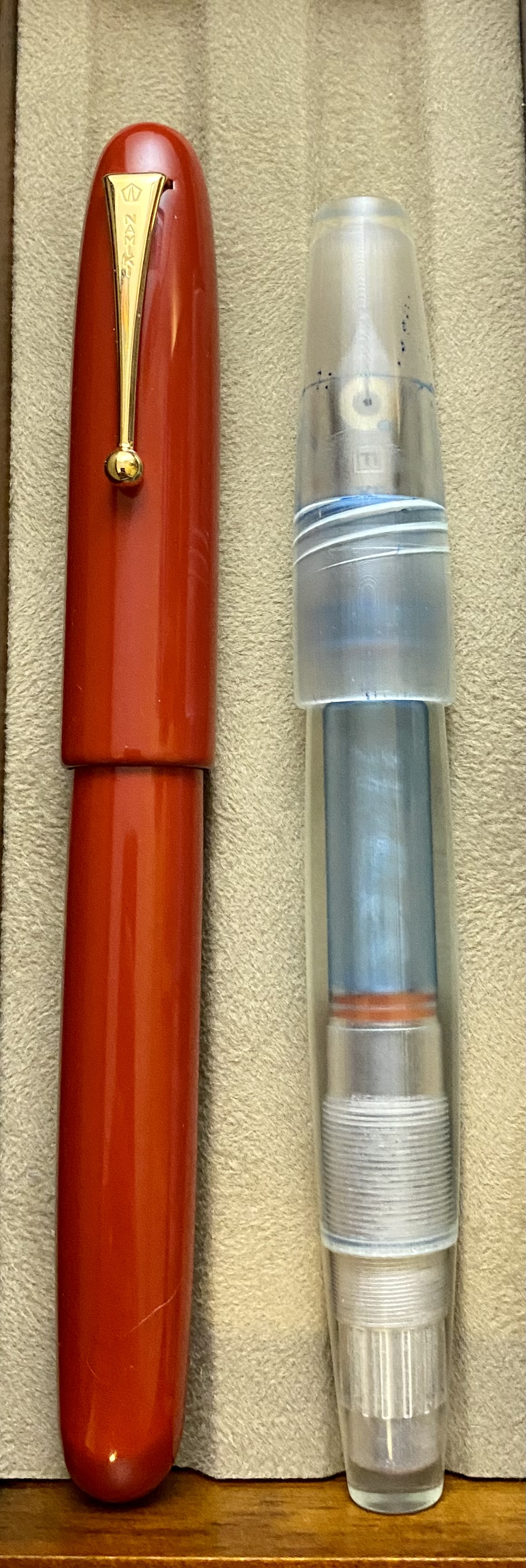
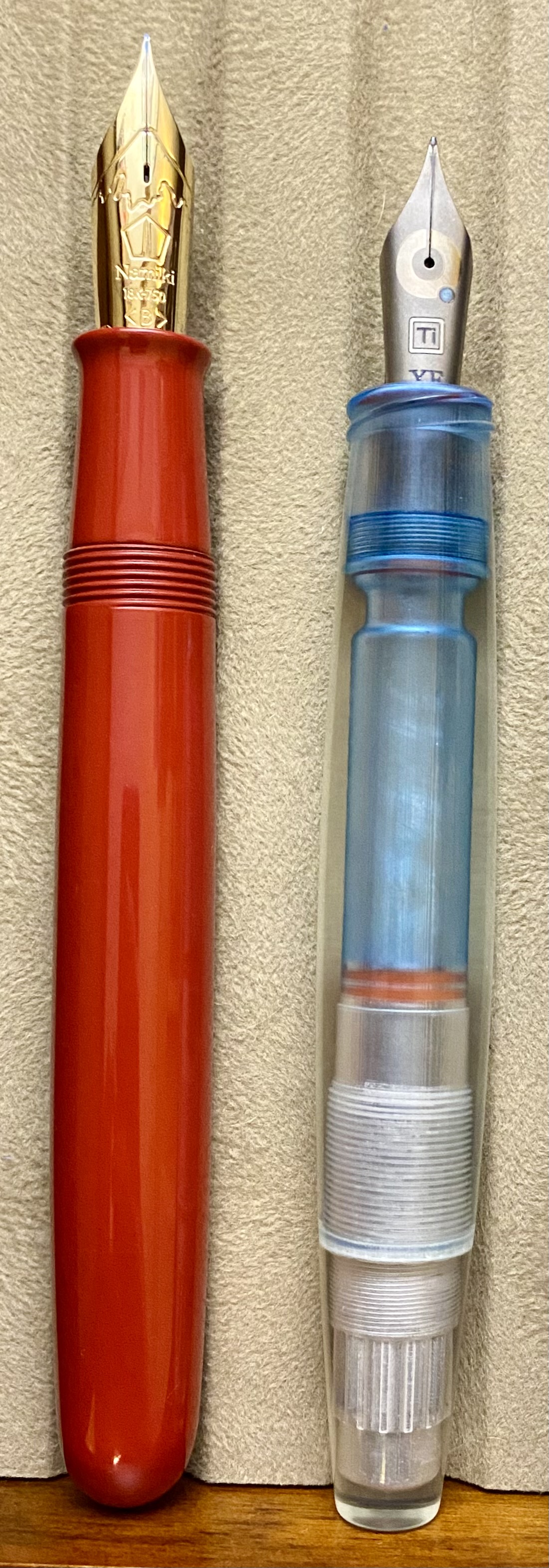
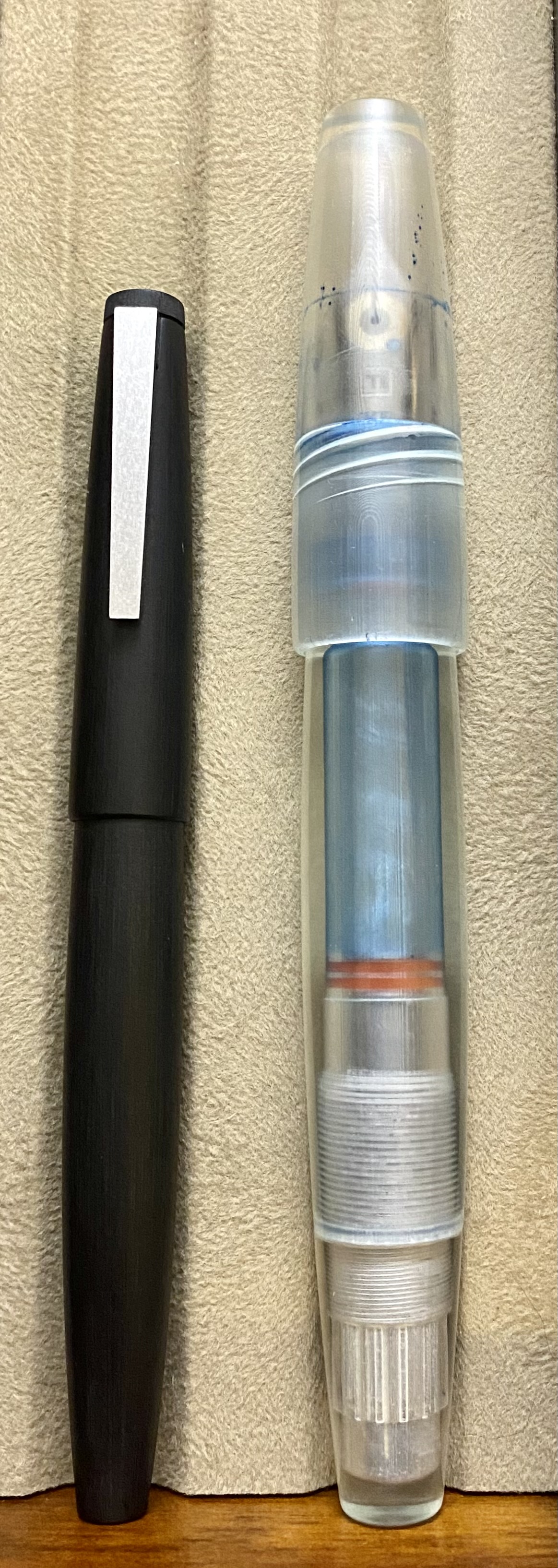
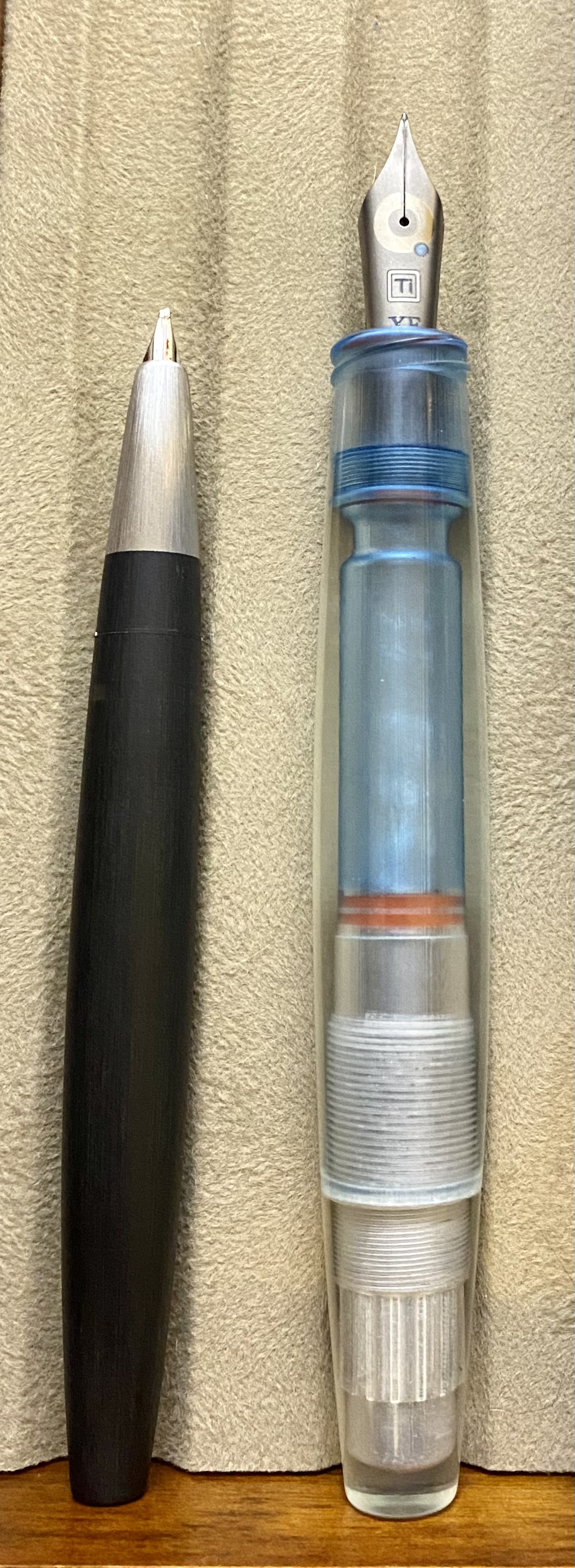
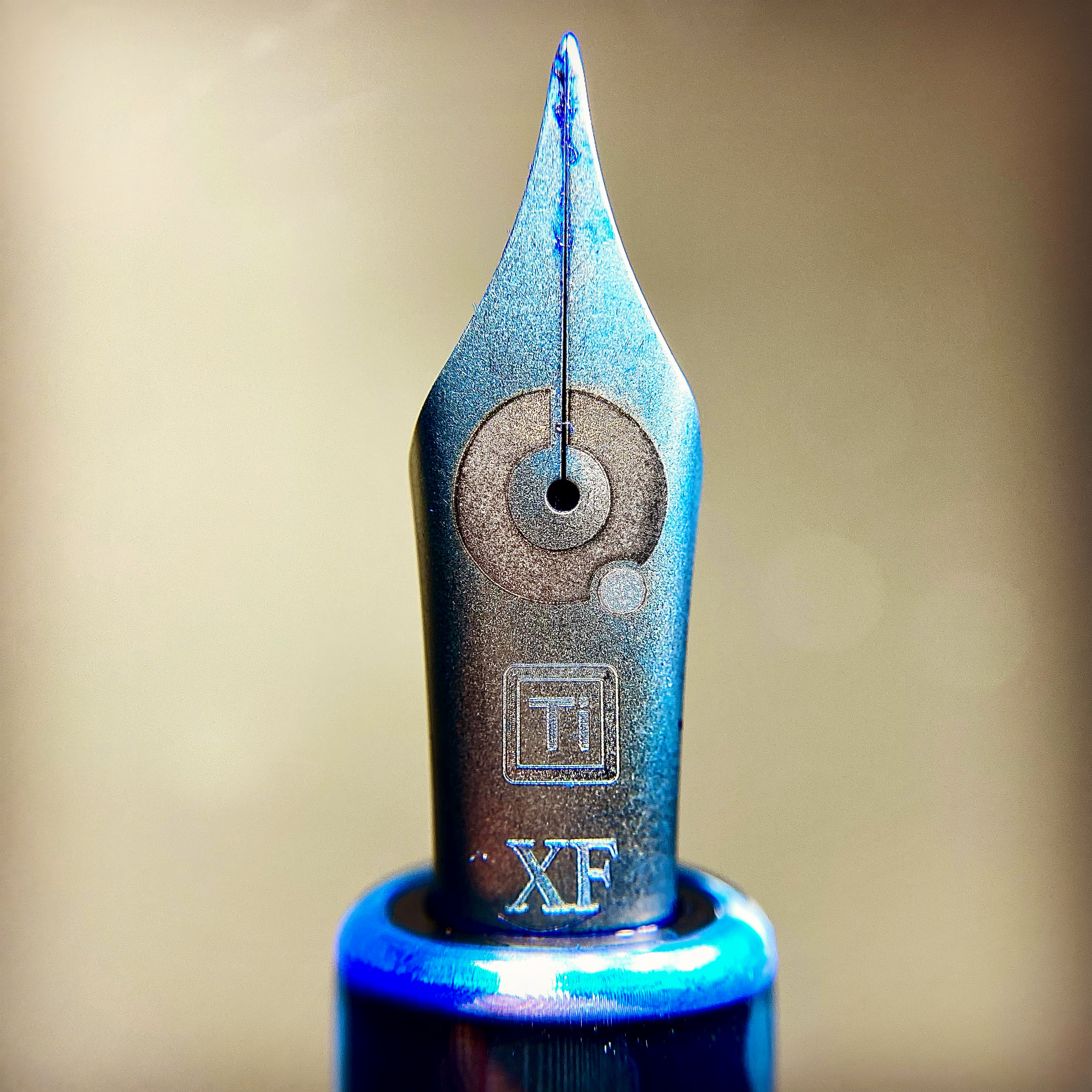
I ordered the Torpedo without a nib and the Pocket with an XF Titanium Bock 380. My original plan was to equip the Torpedo with a ’70’s 14c Medium Montblanc 149 nib that I had lying around in a Flexible Nib Factory 149–>Bock 380 housing, but ink frequently gathered behind the tipping of the nib, indicating some sort of air malfunction. Perhaps a bit of air was sneaking around the custom housing? After a month of using the pen with issues, I swapped the XF TI nib from the Pocket to the Torpedo, and the issue was resolved. The pen is now one of my best writers. The nib offers a smooth, pencil-like feedback that makes writing pleasant on both expensive and cheap paper. William’s custom nib stamp fits the technical feel of the pen perfectly.
I love the pen, but I will offer one warning: It’s REALLY thick. Because of the streamlined design, the section tapers gradually with the body, which leads to a very girthy gripping area. I have large hands, so the pen is comfortable for me, but smaller hands may not get along well with the pen.
The Pocket Titan, however, is a pen fit for all hand sizes. I ordered this pen in blue, which is achieved by dyeing of the UV-cured printed resin. It uses the “long cap” method employed in so many modern pocket pens, most notably the Kaweco Sport–if the cap is long and extends almost fully over the body when capped, it can be posted on the back of the pen in order to extend the length. Indeed, the cap is just slightly longer than the body of the pen (minus the nib), and can be removed in 2.5 turns. Similar the the torpedo, the body of the pen (besides the blind cap) is a single piece that tapers down past the smooth threads to a pinched section, which is extremely comfortable. This is the type of pen that people describe as “becoming part of the hand” because of how comfortable it is. The piston filling mechanism works flawlessly as well. This pen is sporting a modern Sailor KOP nib, which writes like a dream, so it’s a total success story.
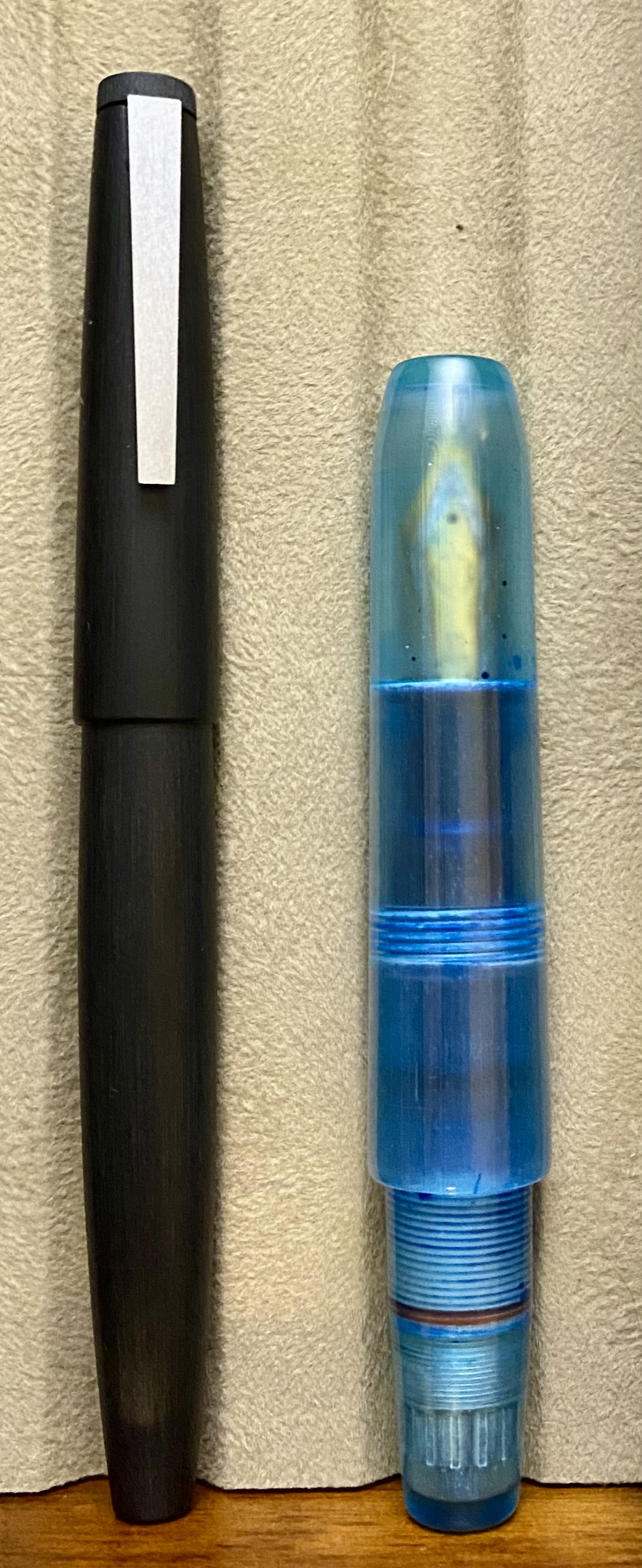
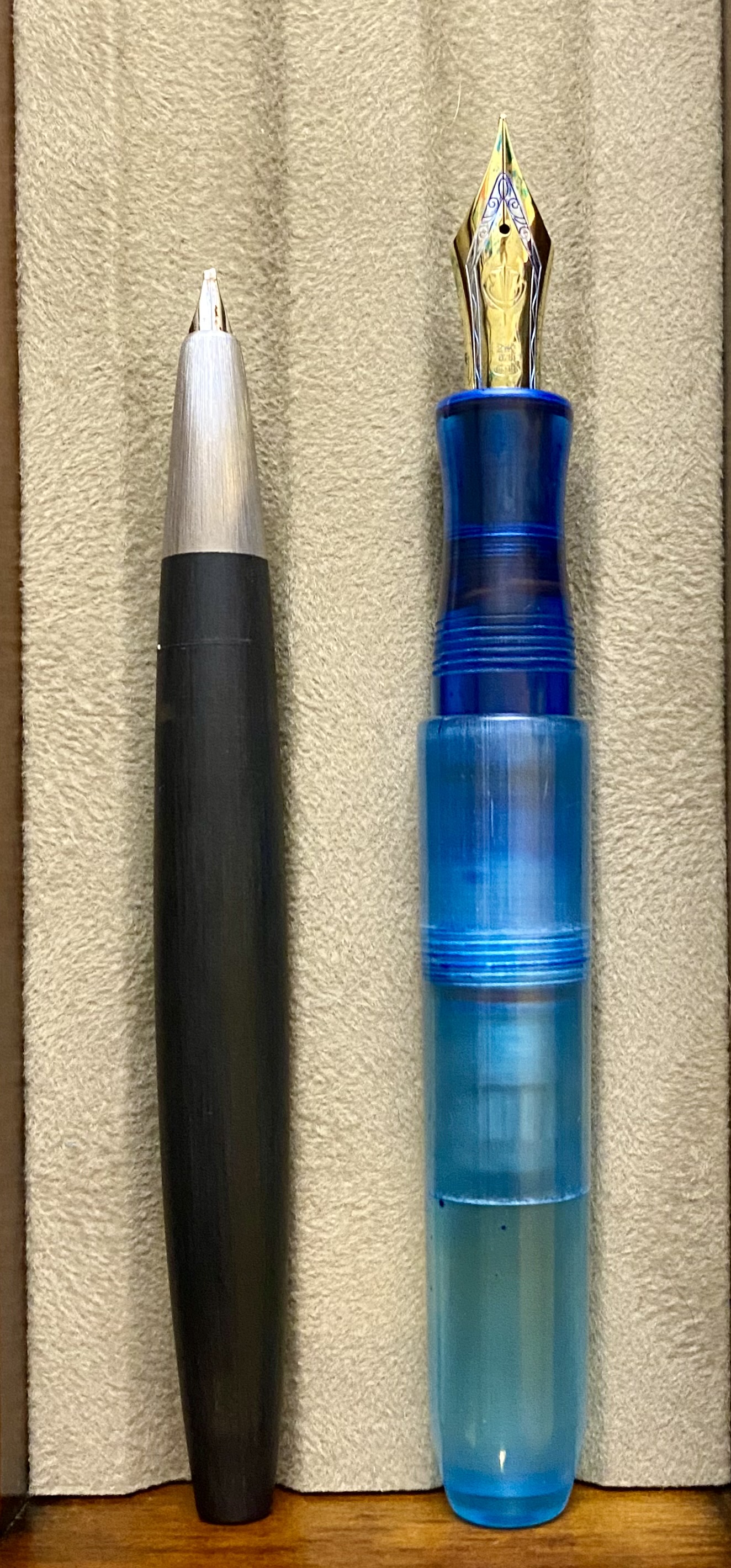
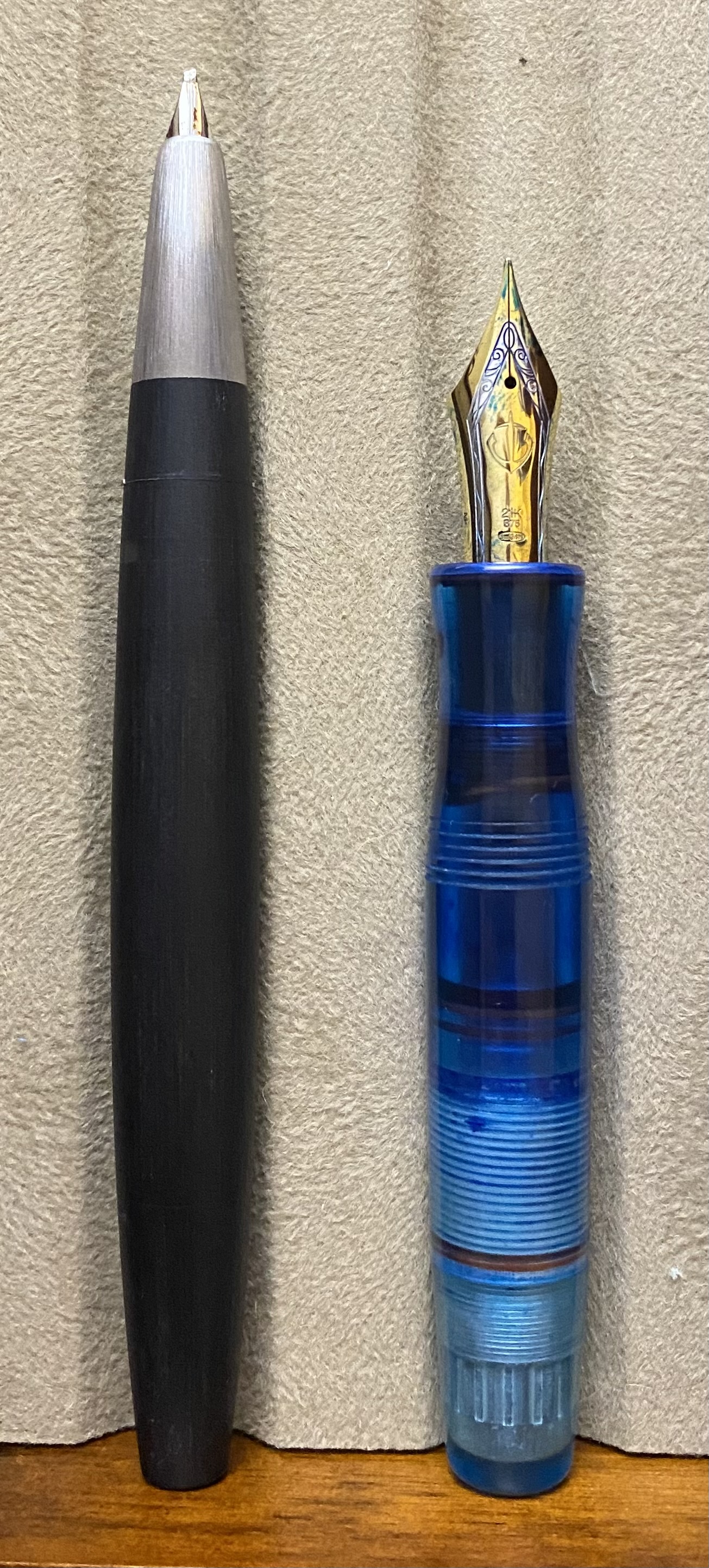
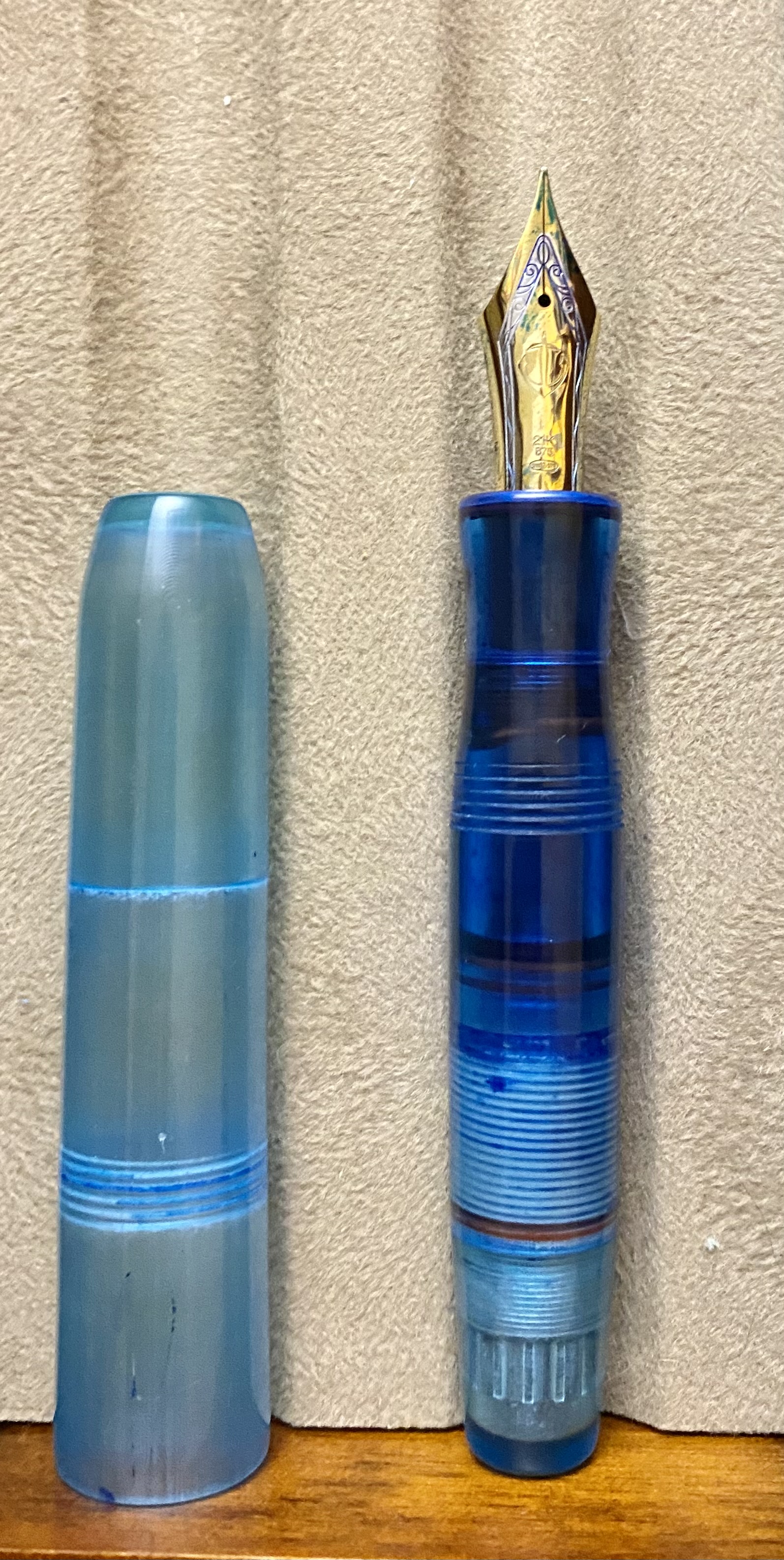
Both pens have visible 3D-printing lines inside the body and (more noticeably) inside the cap. These look nice and add to the novelty of the pen. The ink chambers are also aesthetically pleasing due to the single-piece bodies and, particularly in the Torpedo, the thick resin walls surrounding them. This design creates a sense that the ink is encased deep within the pen, and there aren’t hardware or threads to obstruct the view. Just smooth, clear resin. Both pens are quite light due the lack of any material besides printed resin and o-rings (and the nib unit).

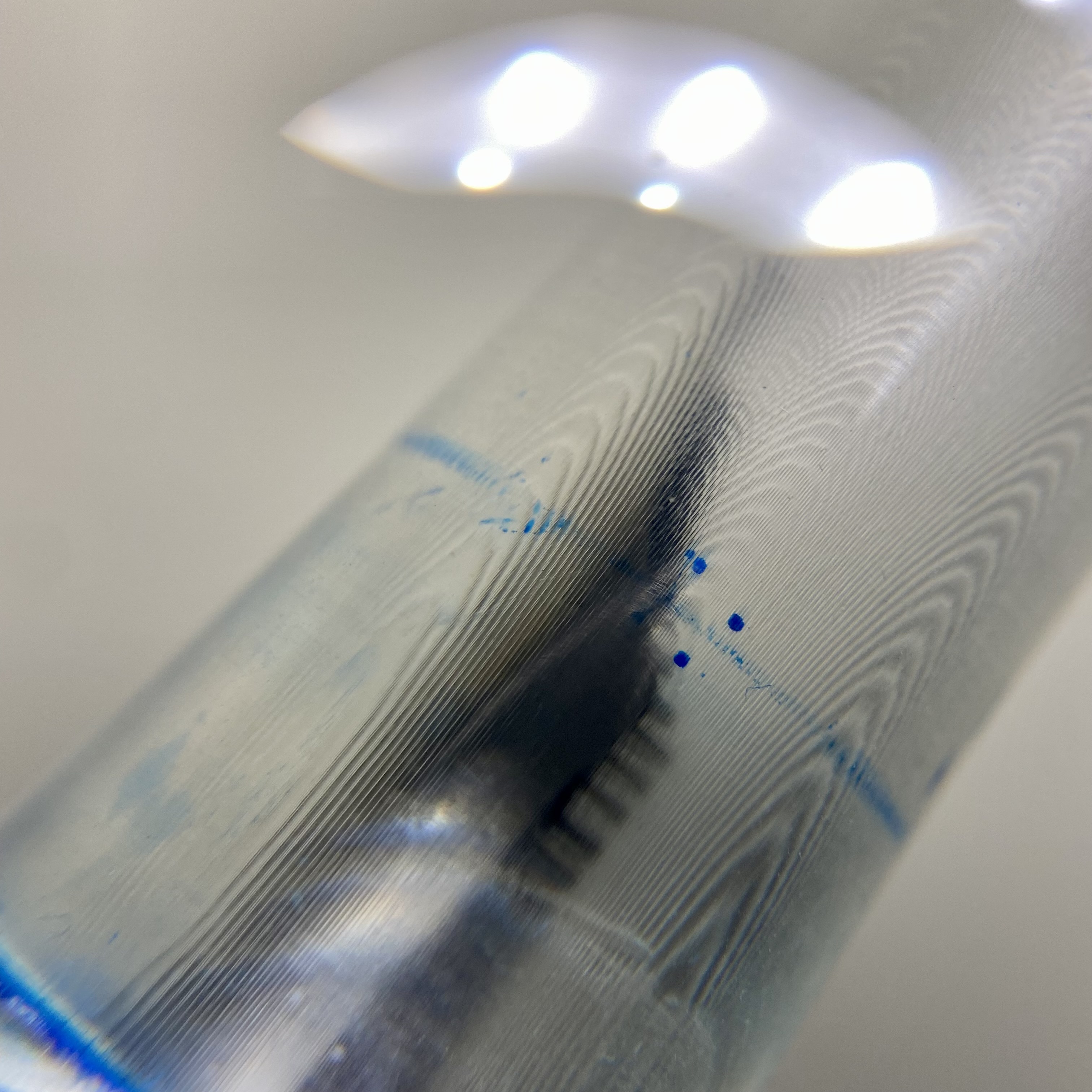
What are the drawbacks of these pens? There aren’t many. Here are the ones that I noticed: first, if you unscrew the blindcap too much, the entire piston unit begins to screw out of the pen. This prevents fully screwing the piston back in, because once the unit is undone, the piston unit is what screws in and out, not the blindcap–>piston rod. William sent me a few videos regarding reassembly, and I was able (with only a little frustration) to put the pen back together after several minutes. This problem was mostly user error, however. Another potential drawback I have encountered so far is staining–Iroshizuku Kon-Peki did a number on the inside of the clear Torpedo, and this resin seems to stain a bit more easily than other demonstrator plastics I have used. I only used water to clean the pen, and the staining doesn’t bother me, so I’m not too worried. I think it may even add character to the pen. I also noticed that the blind cap, when fully screwed in, is not totally flush with the Torpedo’s body–this is a minor problem, as the seam doesn’t rest on my hand, but for somebody with massive hands, it might cause a small amount of discomfort. The Pocket does not suffer from the same issue because the cap is posted over the blind cap.
So, the big question: Are William Shakour pens worth it? The answer is a resounding yes. I bought the Torpedo, nibless, for £120, and the Pocket Titan with a Bock 380 TI for £220 – this is incredible value for pens similar in scale to the Pelikan M1000 or the Montblanc 149. The pens are nice to look at, comfortable (especially the Pocket), versatile, piston-fillers, take #8 nibs, and are some of the few 3D printed pens on the market. William has gotten a good bit of attention within the pen world for his designs, and it’s well-deserved. These are fantastic instruments, and I look forward to further establishing them in my daily rotation.
One note before I finish: William Shakour is now making 3D-printed piston units that can be used by other makers, which is a game-changer for the world of custom pens. Very cool stuff.
Technical Specifications: (Girth measurements all at widest point)
Torpedo:
- Diameter: 19mm
- Circumference: 60mm
- Length capped: 15.9cm
- Length uncapped: 14.6cm
- Length uncapped minus nib: 12cm
- Length posted: 17.8cm
Pocket Titan:
- Diameter: 14.3mm
- Circumference: 45mm
- Length capped: 11.1cm
- Length uncapped: 8.1cm
- Length posted: 14cm
Note: Weight coming soon, scale broken currently. All measurements are approximate.
One sentence review: William Shakour creates 3D-printed piston-filling demonstrator fountain pens with #8 nibs that deserve the attention they get for their high value and innovative designs.
 wlspec.com